
What a Walnut Resident Lookup Confirms
A resident lookup should name the record fact, custodian, date, and access level. The same full name can appear in a parcel record, court case, license file, business filing, obituary, or old directory without describing the same person. Start with the narrowest source that matches the question, then use a second source for control.
| Record | What it can confirm | Where | Access limit |
|---|---|---|---|
| Parcel and assessment | Ownership interest, situs, building facts, possible mailing destination | LA County Assessor | Owner by specific inquiry; not residence proof |
| Recorded deed | Name role, recording date, legal parcel, document | LA County RR/CC | Office name/year index; paid copy |
| Voter registration | Authenticated registration and status | LA County voter status | Self-tool or approved statutory purpose |
| Court case | Party role, case type, filing and hearing history | Los Angeles Superior Court | Category split, fees, and image limits |
| Vital record | Birth, death, marriage, or dissolution event | CDPH or RR/CC | Informational versus authorized copy |
| Business or license | Entity, agent, public address, professional status | SOS or licensing board | Public affiliation is not a home |
| Probate or unclaimed property | Decedent, heirs, representative, or reported old address | Superior Court or State Controller | Sealing, redaction, and corroboration rules |
Use an address-to-AIN handoff when the name is unknown. Use a name-to-role search when the address is unknown. A current result deserves a source date. An older directory or obituary deserves the publication year and exact page. The Walnut by-street record chain handles address work, while this resident lookup owns the one-person comparison.
Control a Walnut Resident Name
Preserve the full spelling, initials, suffixes, approximate age or event date, public role, and location attached to a result. A matching name alone is not enough. Compare at least two independent official sources and ask whether they agree on a role, date, address, parcel, organization, or family connection that the source actually prints. Do not convert an inference into a fact.
A court appearance, registered-agent address, business filing, parcel ownership, or license record can be useful identity control. Each can also belong to a different person with the same name. Clerks may explain an index or copy procedure by phone, but they should not be expected to authenticate that two records refer to one person.
- Docket
- The court's organized case record, including filings, events, parties, and register entries.
- Index versus image
- An index points to a record; an image or certified copy contains the underlying document subject to access rules.
- Certified copy
- A custodian-certified reproduction used when an official copy, not a screen result, is required.
Walnut Resident Property Checks
The assessor can resolve a Walnut address to an AIN and show situs, legal description, structure, values, events, and parcel geometry. The online portal does not offer an owner-name search. The county's specific-property channel is the appropriate way to ask about one property. A mailing address may differ from the situs address, and neither one lists every person using the parcel.
Keep the result's role precise. An owner may not live at the parcel. A business or registered-agent address may be public contact information. A home-owner exemption can support an owner-occupancy inference, but it is not a resident roster. Use a parcel result as one piece of identity control, then seek a source that directly fits the residence question.
Walnut Court Search Records
Walnut cases route to the Superior Court of California, County of Los Angeles. The Find a Case portal provides a case-number path, calendar access, party-name modes for civil, family, and probate matters, defendant-name access for criminal matters, and limited document images for specified civil and small-claims cases. A public summary can show case number, courthouse, filing date, case type or status, parties and roles, future hearings, and the register of actions.
Party-name and image searches may require a public-access fee, guest account, or later verification. Criminal and family images are not generally available online. Adoption, juvenile, sealed, and other sensitive categories follow separate rules. Older files can be requested through the Archives and Records Center at 222 N. Hill Street, Room 212, Los Angeles, weekdays 8:30 a.m. to 4:30 p.m.; a two-business-day appointment lead is recommended. Federal cases use a different system, and PACER's fee guidance explains its separate docket charges.
Image context: the Los Angeles Superior Court Archives and Records Center is the source for this court-record access view. It shows the in-person fallback when a Walnut resident lookup reaches an older file.

An archive record may supply a party role or case history, but a case address is not automatically a home address. Match it to the question and the date.
Walnut Vital Record Copies
California does not use one blanket opening schedule for ordinary informational vital copies. Informational certified copies of birth, death, and public marriage records are generally available, while authorized identity-use copies are restricted under Health and Safety Code sections 103525-103526. Confidential marriage, adoption, sealed birth portions, and other protected material have narrower routes.
CDPH lists fees of $31 for birth, $26 for death, $19 for marriage, and $18 for a dissolution certificate. Its authorized-versus-informational guidance and fee schedule should be checked before ordering. Orders are mailed, search fees remain due even when no record is found, and an authorized mail request may require a notarized sworn statement. LA County's in-person birth request route supplies county coverage and turnaround details; some online ordering uses VitalChek. A dissolution certificate names parties, filing date, county, and case number; it is not the divorce decree.
Use an informational copy to learn whether an event record may exist, not to claim identity. A Walnut resident lookup should preserve the copy type and eligibility status in its notes.
Walnut License and Business Checks
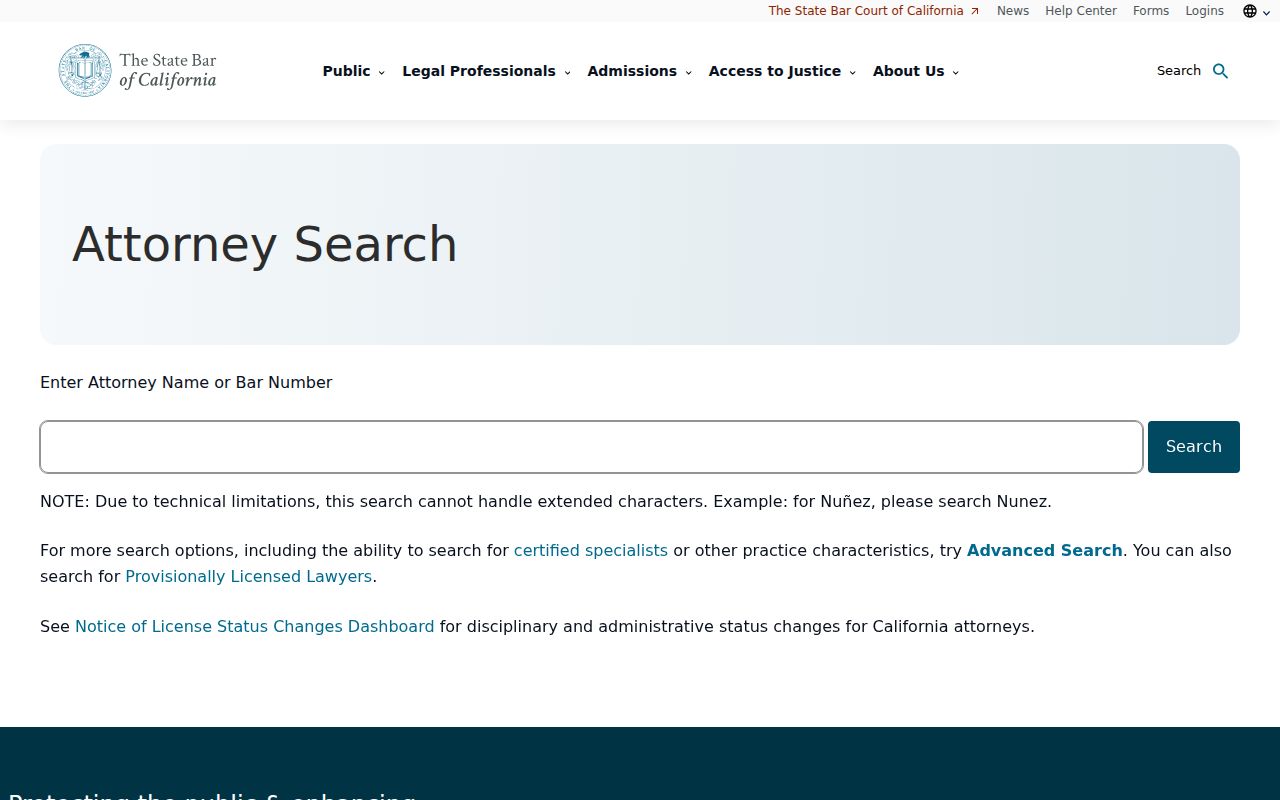
California's Department of Consumer Affairs search can filter by board, license type, name, city, county, and ZIP, with public status or discipline where published. The State Bar search can return attorney name or bar number, status, admission, and discipline. A board result can confirm a public credential. It does not establish a Walnut home address.
California bizfile accepts a business name or file number, with advanced filters for entity type or group, status, initial filing date, and public-disclosure fields. An abstract may show legal name, entity or file number, registration date, status, jurisdiction, principal or mailing addresses, agent for service, and filing history. The SOS warns that an abstract is not certified or necessarily complete and does not promise ownership, phone, email, or subsidiaries.
Image context: the California State Bar Licensee Search is the source for this professional-record capture. It illustrates how a role-specific official lookup can help separate two names without claiming a residence.
State and local business records are affiliation evidence. Keep them separate from address and household evidence.
Find a Walnut Heir or Parent
Some personal searches need a specialized route. A probate case can contain public filings naming a decedent, heirs, or representatives, subject to sealing and redaction. A former classmate trail may use verified yearbooks, newspapers, or alumni channels. An adopted person or birth parent should use California's official adoption-information and court procedures rather than an ordinary birth search. Eligibility rules are part of the record path.
The Walnut Library's Chinese Language Collection, Sing Tao Daily, and World Journal can support family and obituary research when names appear in different order or spelling. Test family-name-first order, hyphenation, Anglicized given names, and alternate characters. Newspapers report associations and events; they are not official proof of present residence.
Keep the human goal lawful and narrow. A family-history clue may justify a newspaper or probate search, but a protected address, sealed adoption file, or confidential vital portion is a hard stop.
Verify One Walnut Resident Twice
Use a two-source check when a result matters. Anchor the name to one role or place, then confirm it through a separate custodian. An address-to-AIN-to-owner route can be paired with a recorded deed. A court party can be compared with a license or published obituary. A business affiliation can be compared with a specific date or public filing. Keep the sources independent and write down the reason they match.
- Define the fact: current registration, ownership, case role, event, affiliation, or historical household.
- Run the narrow official search and save the source date, field values, and access limits.
- Check a second custodian with a matching role, date, geography, or relationship clue.
- Mark what remains inferred, unavailable, sealed, or not proven.
- Ask the custodian for a correction when the source itself is wrong.
A directory cannot correct an assessor, court, voter, or vital record. The source office controls the correction process.
Walnut Resident Lookup Limits
Privacy limits are part of a complete Walnut resident lookup. Safe at Home supplies substitute mailing and confidential voter procedures for qualifying participants, but it does not erase already-public data. DMV personal data is restricted by the federal DPPA. Voter contact fields, identity-use vital copies, juvenile and adoption material, and sealed court records are controlled by separate rules.
Lawful use. Use public records for personal, lawful research and respect the limits attached to each custodian. Never use a name, address, court role, or family clue to stalk, harass, intimidate, or harm anyone.
Commercial people-finder services can be stale, merge same-name people, and hide their source dates. If private broker data is the problem, use the provider's official removal route or California's DROP process. That deletion path concerns broker databases. It does not rewrite official deeds, court files, voter records, or vital records.
Walnut Lookup Results Need Context
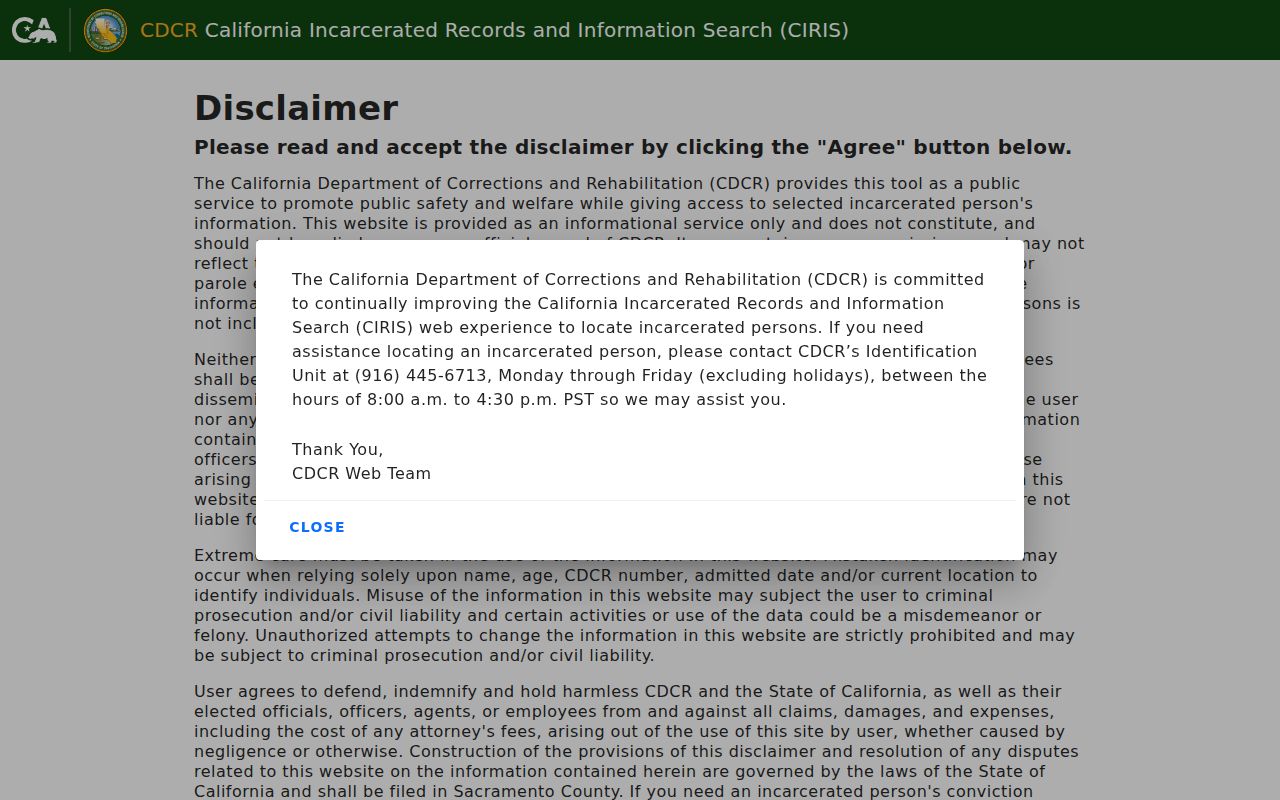
CDCR's CIRIS tool is informational and uses a disclaimer gate before a name or CDCR-number search. A result can show a name, age, CDCR number, location, admission, commitment county, and parole-eligible date. It may be incomplete and is not a certified criminal history. LASD custody and records requests are separate channels, with crime-report access depending on victim or authorized status and active-investigation exemptions.
Image context: the California Incarcerated Records and Information Search is the source for this state lookup view. It demonstrates why a name result must carry its disclaimer and record type.
Use a custody or registry result only for the narrow public fact it states. Do not expand an informational record into a broader claim about a Walnut resident.