
How Walnut Residents Are Found
Walnut has no single public resident roster. The useful trail depends on what is already known. An address points first to the Los Angeles County Assessor Portal, where an AIN, or Assessor Identification Number, can be resolved. A person who owns property may then be connected to the recorder's name-and-year index. A current voter status check is a self-service authentication tool, while court, vital, license, and business records answer narrower questions. Older households require the Walnut Library, county collections, newspapers, census schedules, and careful geography.
Use the result as a lead, not as proof that every person at an address is present. The assessor's owner field is suppressed online, a mailing address may differ from the situs address, and a business or court address is not a home address. A sound Walnut residents directory search keeps the source, date, role, and jurisdiction attached to every name.
- Write down the known name, address, approximate year, or record type before searching.
- Resolve a Walnut address to an AIN and parcel detail through the assessor portal.
- Use the exact owner name and approximate recording year at the recorder's Norwalk index.
- Run the Los Angeles voter-status form only for the person who can authenticate the record.
- For an older household, compare directory, census, newspaper, death, or probate evidence.
Offices Behind Walnut Resident Records
Record custody is split across city, county, and state lines. Walnut City Clerk records stay local, but deeds and recorded maps belong to Los Angeles County RR/CC. The Assessor keeps parcel facts, the Registrar of Voters controls voter-data access, and Superior Court holds probate, family, civil, and criminal case material. The California Department of Public Health holds statewide vital records, while the library and archives supply historical context.
Los Angeles County RR/CC
12400 Imperial Highway
Norwalk, CA 90650
(800) 201-8999
Walnut City Clerk
21201 La Puente Road
Walnut, CA 91789
(909) 348-0710
The Walnut Address to AIN Handoff
Enter a Walnut street address in the assessor's Basic Search. Its single autocomplete field accepts an address or a 10-digit AIN. Legal Search accepts an assessment legal description, and Map Search lets a reader select adjoining parcel polygons. The public result can show situs, use or type, tax-rate area, legal description, building size, units, beds and baths, year built, assessments, exemptions, recording events, and parcel geometry. It does not show an owner-name search.
For a specific property, use the Assessor's phone or specific-property inquiry with the complete address or AIN. The county FAQ identifies (213) 974-2111 and (888) 807-2111 for ownership questions. Keep situs and mailing concepts separate. Situs is where the parcel sits; mailing is where tax correspondence goes. Either can help frame a records search, but neither identifies every household member.
| Assessor field or mode | What it does |
|---|---|
| Basic Search | Address or AIN autocomplete for a parcel. |
| Legal Search | Looks for the assessment legal description. |
| Map Search | Shows parcel geometry and adjoining AINs. |
| Owner name | Not available as an open online search; use a specific-property inquiry. |
Image context: the official assessor portal is represented by this Walnut residents directory capture of its parcel search. The screen makes the address-first handoff visible, while the missing public owner field is itself an important limit.
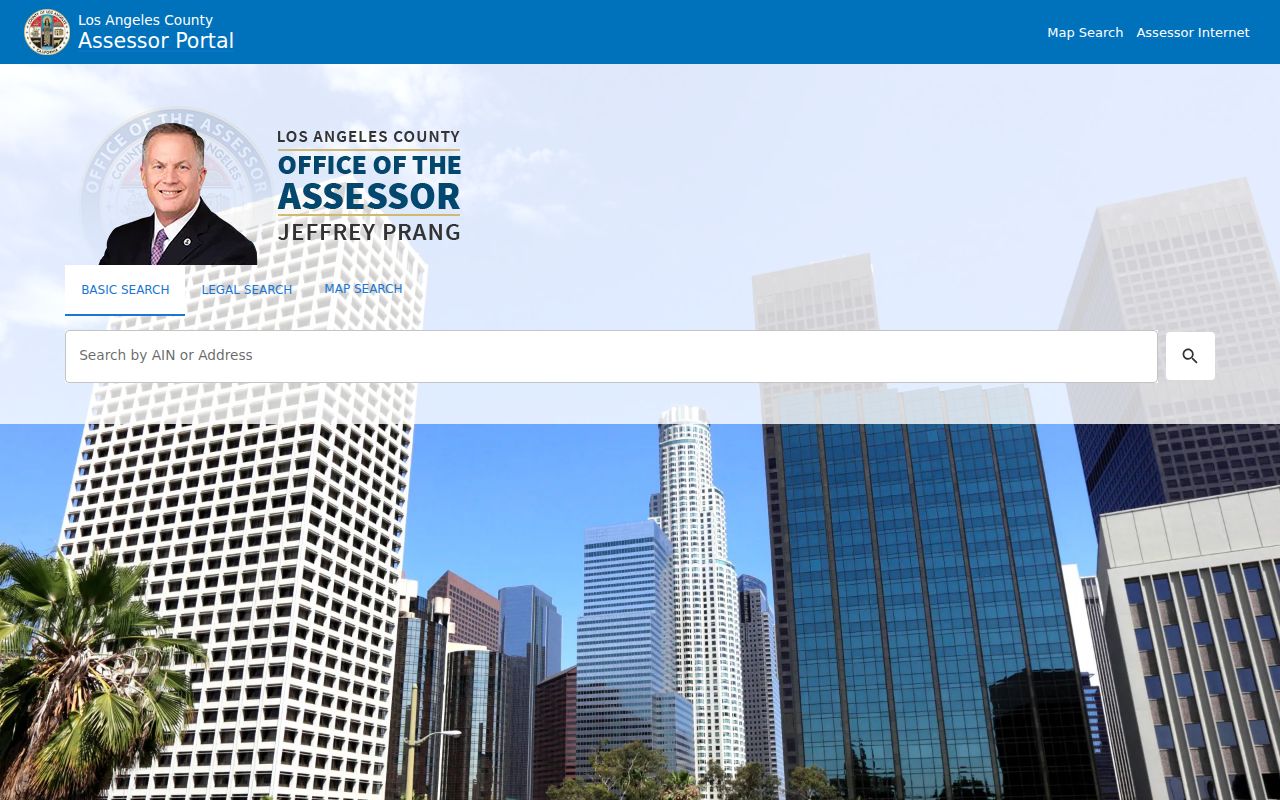
The map is strongest when it turns a street question into a short list of AINs. Owner identity still requires the county's specific channel, and a parcel remains property evidence rather than a resident roll.
Walnut Recorder Name Search
The Los Angeles County Registrar-Recorder/County Clerk has real-estate records from 1851 to the present, with one official request page using “since 1850.” The index is alphabetical by grantor, grantee, and recording year. It is not an address search. There is no public internet deed index, and staff will not conduct a telephone index search. At Norwalk, records from 1851-1957 are reviewed on the lower level and 1958-present on the second floor.
Once a specific owner name and an approximate year are known, the index can lead to deeds, deeds of trust, releases, liens, notices, and maps. A plain copy costs $5 for the first page and $3 for each additional page. A certified copy costs $6 for the first page and $3 for each additional page. A staff search costs $0.50 per name per year, with a $1 minimum, and a purchased document is complete rather than a selection of pages. Online fulfillment is an order channel, not a searchable database.
Image context: the RR/CC viewing instructions explain why the Walnut residents directory route begins with an address-to-owner handoff rather than a street query. The capture below records that offline index rule.
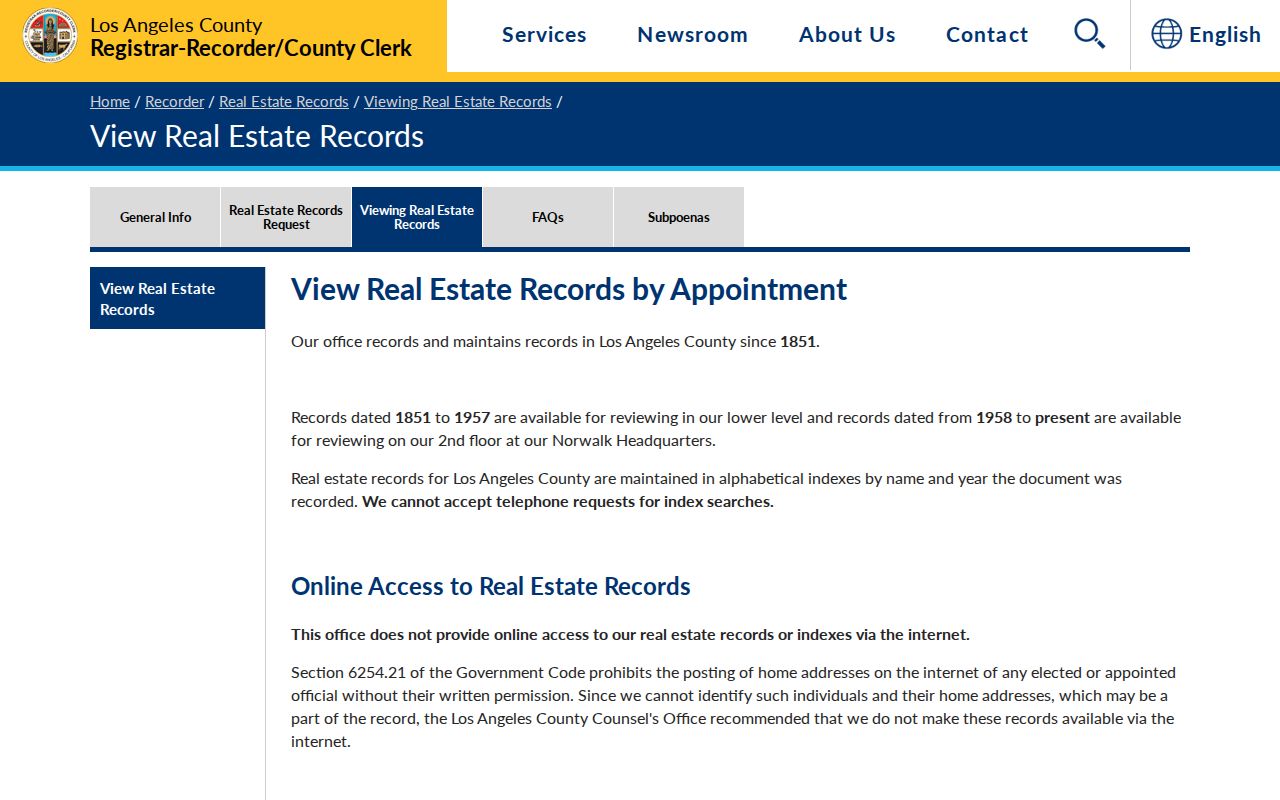
That constraint is a Walnut research quirk worth planning around. Resolve the parcel first, then carry the owner's name and year to Norwalk. Wills, probate, divorces, and most court records belong to Superior Court instead.
Current Walnut Directory Sources
The phrase current residents directory covers several partial sources, not one complete list. Each row below has a different keeper and a different meaning. A city staff listing supplies work contact information. A business license connects an operator to a Walnut premises. The voter-status form authenticates one person's own registration. The assessor describes parcels and values. Together they help a careful searcher choose the right next record.
| Source | Who or what appears | Keeper | Access |
|---|---|---|---|
| Parcel assessment roll | AIN, situs, legal, structure, value, events | Los Angeles County Assessor | Free address or AIN portal; owner by specific inquiry |
| Voter status tool | One person's registration status | Los Angeles County Registrar of Voters | Self-verification with name, birth date, house number, ZIP |
| Recorded index | Grantors, grantees, liens, notices, maps | LA County RR/CC | Norwalk name/year index and paid copies |
| Staff directory | Public employee name, title, department, business contact | City of Walnut | Searchable city page |
| Business license file | Business, operator, premises, license status | Walnut | City questions and license channels |
Move from broad evidence to a narrow confirmation. The Walnut resident lookup workflow is the better fit when the goal is one person's role, event, or affiliation. A street-wide question belongs with the by-street address chain, and an older household belongs with the library and historical collections.
Image context: the Los Angeles County voter status form shows the four-field self-check that must not be mistaken for a browsable Walnut residents directory.
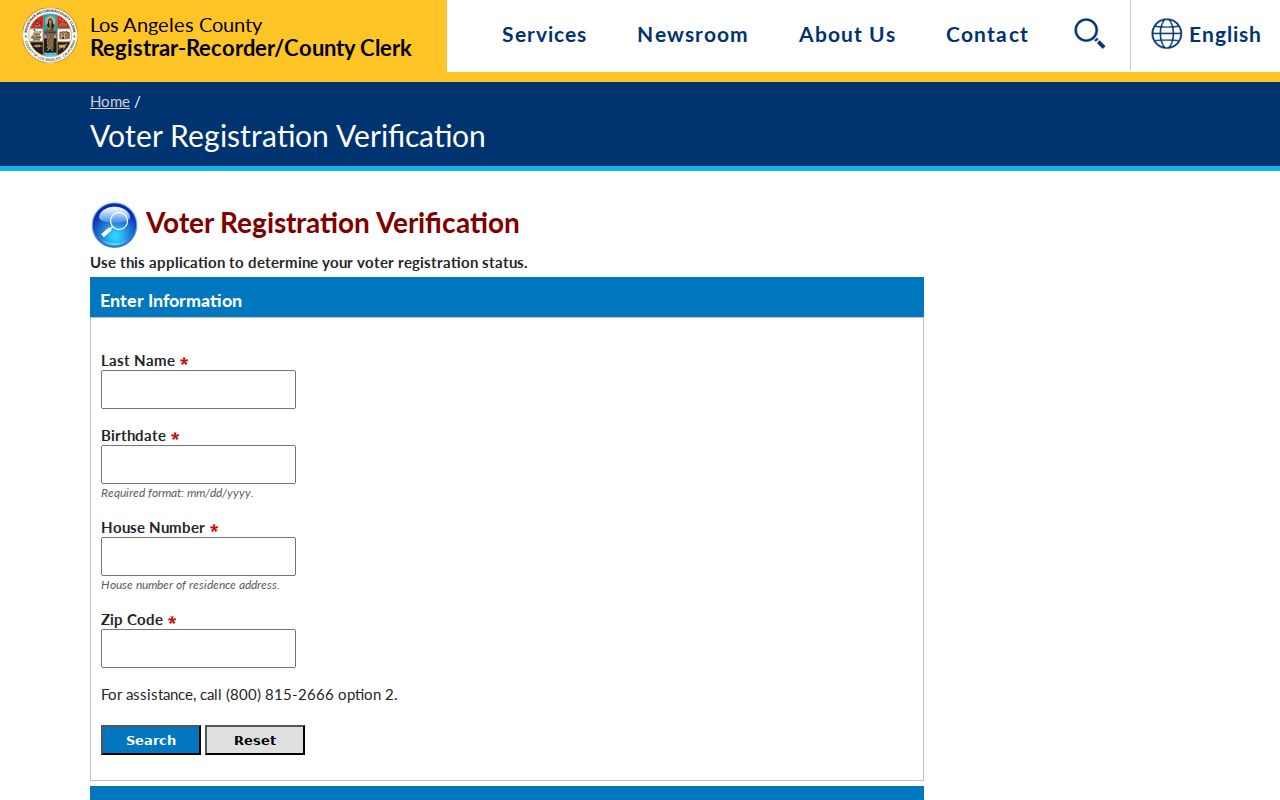
The form's required last name, birthdate, house number, and ZIP make it an authentication path. It does not let a visitor browse all voters on a street or inside a ZIP.
Walnut Voter Status Limits
California voter information has two separate lanes. A Walnut voter can use the county status page with last name, birthdate, house number, and ZIP. Bulk or specific-voter data is limited to approved election, scholarly, journalistic, political, or governmental purposes. Commercial use is prohibited. The county identifies a specific-voter request as covering up to ten people per application, with full name, birth date, county, and residence address required. Safe at Home participants use confidential procedures.
Public voter data can include a name, registration date, residence and mailing address, precinct, party, permitted contact data, and status, with optional election history showing method but never ballot choices. Driver license data, Social Security fragments, unique voter identifiers, and signatures are excluded under Elections Code section 2194. The result is not a public Walnut residents directory. It is a regulated record set with a purpose attached.
Walnut Court Resident Records
Superior Court of California, County of Los Angeles, handles Walnut civil, criminal, family, probate, and small-claims cases. The Find a Case system offers a case-number route, a calendar route, party-name modes for civil, family, and probate matters, a defendant-name mode for criminal matters, and limited document-image access for specified civil and small-claims records. A public summary may show case number, courthouse, filing date, case type or status, parties and roles, future hearings, and the register of actions.
Party and image searches may require a public-access fee, guest account, or later verification. Criminal and family document images are not generally available online. Adoption, juvenile, sealed, and other sensitive records follow separate restrictions. Older files can be pursued through the Archives and Records Center at 222 N. Hill Street, Room 212, Los Angeles, weekdays 8:30 a.m. to 4:30 p.m., with an appointment lead recommended.
Use court records for a party role or case history, not for an untested claim that a person lives in Walnut. A case address can be a mailing, business, or courthouse contact.
Walnut Vital Record Copies
California vital records turn on copy type, not a blanket 50, 75, or 100-year opening schedule. Informational certified copies of birth, death, and public marriage records are generally available, but they are marked as not valid to establish identity. Authorized copies are restricted under Health and Safety Code sections 103525-103526. Confidential marriage, adoption, sealed birth portions, and divorce decrees have narrower routes.
California Department of Public Health lists state fees of $31 for birth, $26 for death, $19 for marriage, and $18 for a dissolution certificate. LA County RR/CC provides county birth services, while Superior Court supplies the actual divorce judgment. A dissolution certificate is an index-style record naming parties, filing date, county, and case number. It is not the decree. Mail requests can include a sworn statement, and an authorized copy may require a notarized statement of eligibility.
An event record can confirm that a birth, death, or marriage was recorded. It does not by itself establish that every matching name is the same person.
What Walnut City Hall Holds
The Walnut City Clerk at 21201 La Puente Road keeps official council minutes, agendas, original resolutions, ordinances, municipal election material, the City Seal, and administrative files. Requests can be made by phone at (909) 348-0710 or (909) 348-0711, by email to tdedios@cityofwalnut.org, or in person. The city says there is no request fee, though direct duplication cost may apply to physical copies.
City Hall determines within ten calendar days whether responsive disclosable records exist and estimates availability. That is a determination window, not a promise that every file will be produced within ten days. Building and Safety holds permit, plan-review, and inspection evidence. A request keyed to an exact address or AIN should name the permit type and date span because no historical public permit database or coverage date was verified. The City's Staff Directory lists public work contacts, not private residents.
Keep the request narrow and name the custodian. The City Clerk cannot supply deeds, probate, court files, or certified county vital records.
Walnut Public Records Requests
A missing web search does not mean the record does not exist. The California Public Records Act lets any person or entity request disclosable records from the agency that holds them. The agency generally determines within ten days whether responsive records exist, and a written unusual-circumstances extension can add up to fourteen days. Inspection is generally free, while copies may carry direct duplication or statutory costs. Agencies must assist in identifying records, but specialized rules still control voter, vital, court, DMV, juvenile, sealed, and adoption material.
For Walnut, a good request names the department, exact address or AIN, subject, date range, desired electronic or inspection format, and a way to respond. Use City Clerk channels for municipal permits or administrative files. Use RR/CC for recorded copies, Superior Court for case material, and the Assessor for one specific owner inquiry. Routing the request to the wrong office adds delay and can produce a technically correct no-record response.
Walnut Protected Address Records
California's Safe at Home program supplies a substitute mailing address and mail forwarding for qualifying survivors and certain threatened public or reproductive-health affiliates. It can include confidential voter registration and agent-for-service functions. The program does not erase already-public deeds, and a legal description can still locate land. A Walnut residents directory must never reveal or reverse-engineer a protected participant's real address.
Other closures matter too. The federal Driver's Privacy Protection Act limits DMV personal-data release. Voter home and contact fields are controlled by Elections Code sections 2188 and 2194. Vital identity copies, juvenile and adoption files, and sealed court records have distinct restrictions. California's CCPA rights and the 2026 DROP platform address private data brokers, not the correction or deletion of an official deed or court file.
Image context: the California DROP platform is the source for this current privacy illustration. It concerns broker suppression, while source records remain with their custodians.
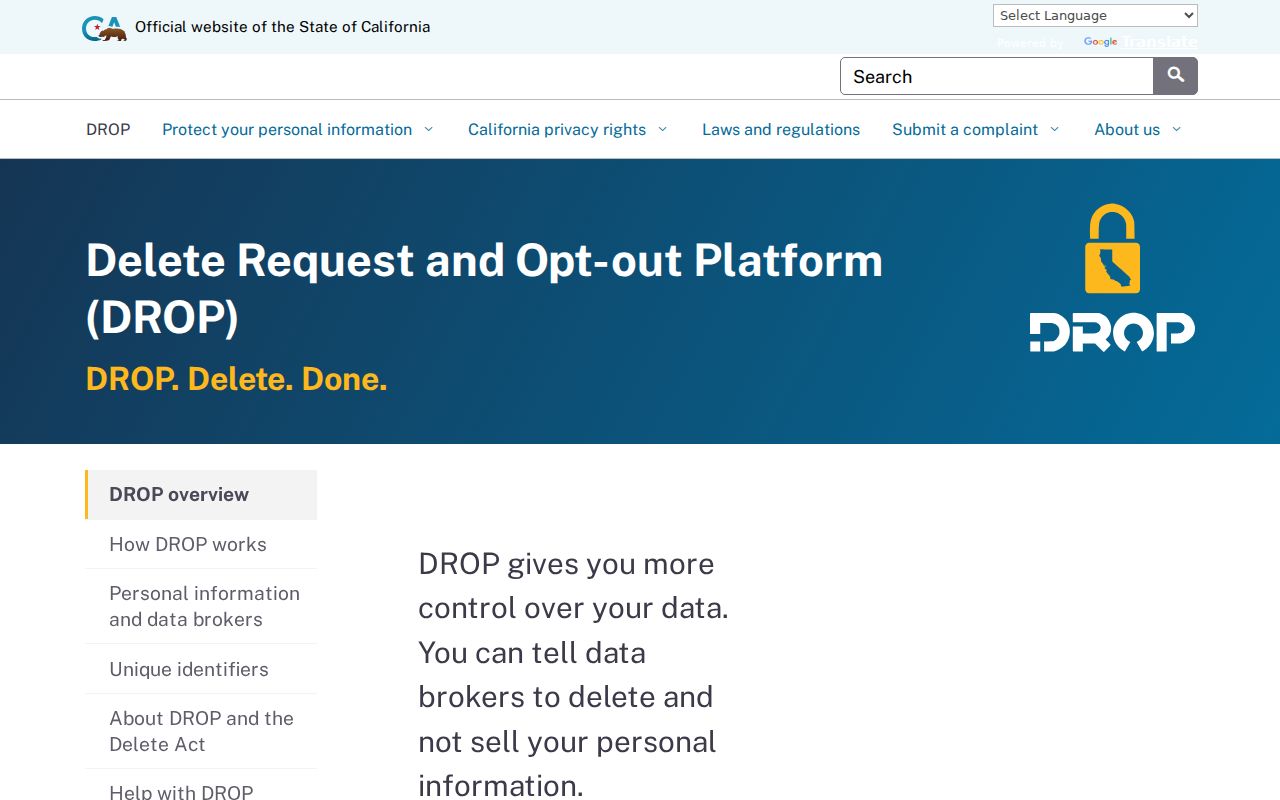
California announced the one-request tool in 2026, with broker processing beginning August 1, 2026. That is a privacy choice for broker data, not a way to rewrite public records.
Walnut ZIP Geography Has Edges
ZIP geography can mislead a Walnut residents directory search. Ordinary street-delivery addresses use 91789, but its Census ZCTA extends beyond Walnut. The 2020 relationship data places about 55.65% of the ZCTA's land inside Walnut, with the rest reaching Industry, Diamond Bar, Rowland Heights, Pomona, West Covina, and unincorporated land. ZIPs are delivery constructs; ZCTAs are generalized statistical areas. Neither is a city boundary.
ZIP 91788 identifies the Walnut postal facility and PO-box role, not a mappable residential neighborhood. USPS address lookup is the right way to validate one address. The assessor accepts an address or AIN rather than a documented ZIP-wide resident query, and the voter form uses ZIP only as one authentication field. Narrow a ZIP result to a street, then use the by-address record chain.
Walnut's Library Holds the Past
Walnut Library opened in 1916, forty-three years before incorporation. It began in Walnut Elementary School, shifted to a bookmobile in 1964, moved to a storefront at 134 N. Pierre Street in 1970, and reached its current 10,000-square-foot branch on February 13, 1985. The branch at 21155 La Puente Road provides research help, catalogs, databases, newspapers, and a Chinese Language Collection. Hours are Tuesday and Wednesday noon to 8, Thursday through Saturday 10 to 6, and closed Monday and Sunday.
The LA County Library Californiana Collection at Norwalk has more than 24,000 books, over 200 newspaper and magazine titles in paper or microfilm, California censuses from 1850-1910, and city directories dating to the nineteenth century. LAPL adds U.S. directory film from 1861-1960, Los Angeles directories from 1873-1942, and digitized Los Angeles-area runs from 1875-1987. Those Los Angeles runs cannot be labeled Walnut coverage without a catalog match. Query City or Community=Walnut and County=Los Angeles, then ask Walnut or Norwalk staff to verify the shelf.
The library is an access bridge, not proof that a Walnut-specific printed directory exists. Report the exact title, publisher, year, and community coverage before relying on an entry.
Walnut Free State Checks
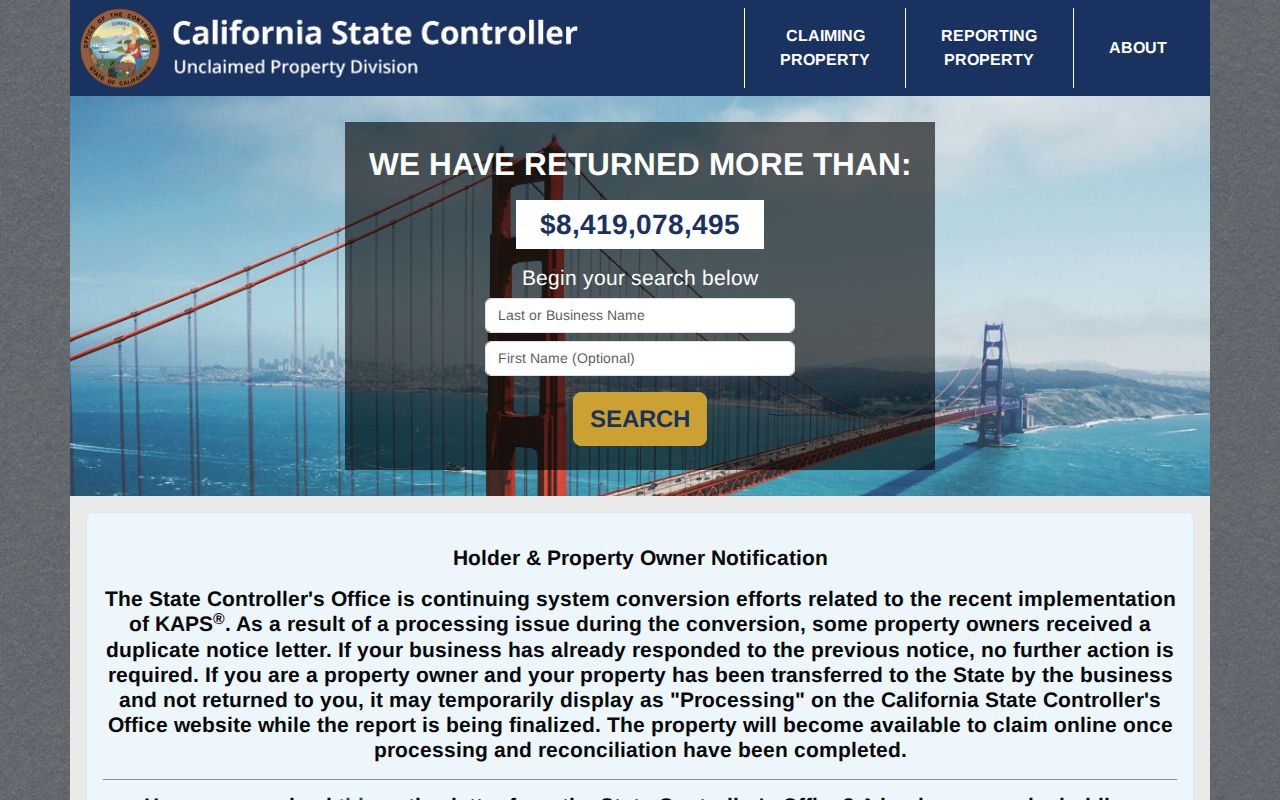
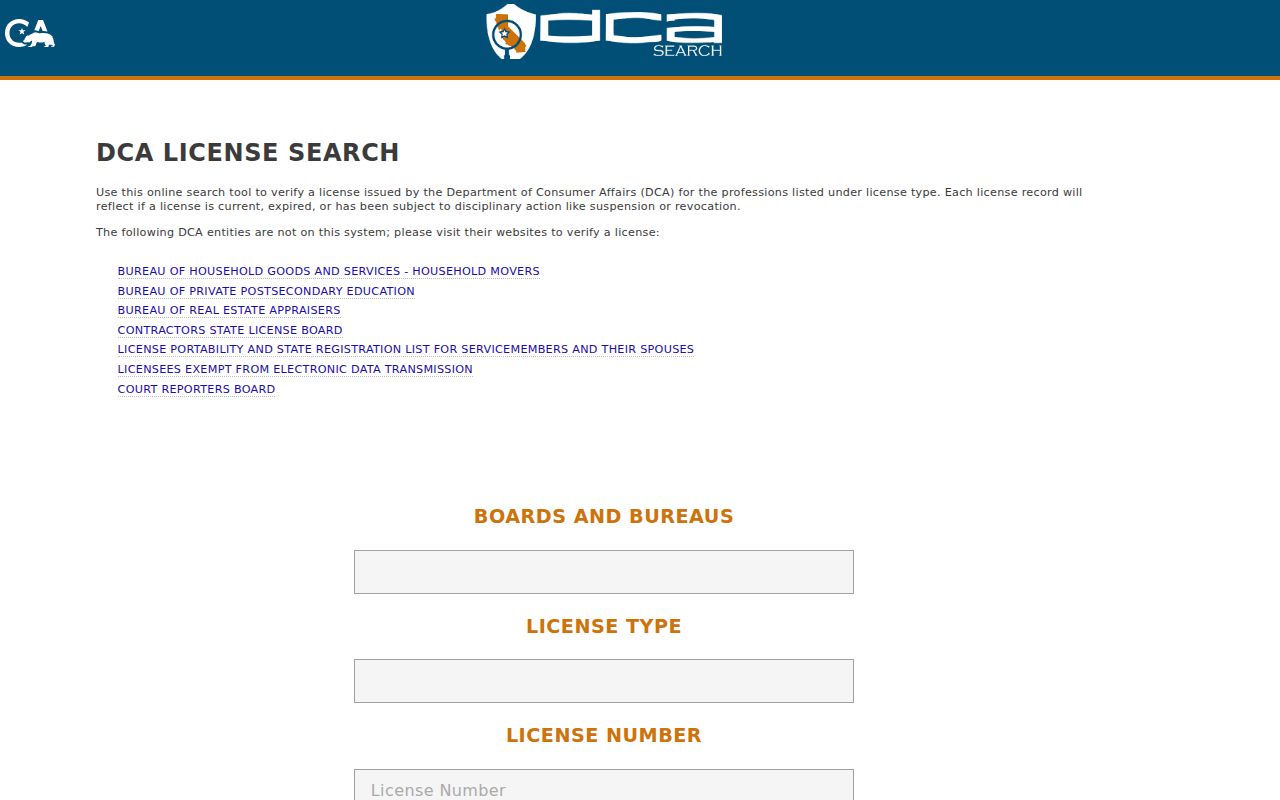
Several official California searches can add context at no cost. The State Controller's unclaimed-property search accepts last name or business name, with first name and city optional. A result may show a reported owner, old address or city, property type, reporting business, and property ID. Claims are free, but an old address is corroboration rather than current residence. California bizfile supplies business abstracts and filing PDFs, while the Department of Consumer Affairs search supplies board, license type, name, city, county, ZIP, status, and discipline where published.
These tools answer narrower questions than a general Walnut residents directory. A business entity's principal address can be a public contact point. A license address can be an office. The SOS warns that its abstract is not certified or necessarily complete and does not promise ownership, phone, email, or subsidiaries. Check the source date, record role, and agency before paying a private service or ordering a copy.
Image context: the California unclaimed-property search is the source for this old-address capture. Its result can corroborate a past connection, but it does not prove current residence.
The California Department of Consumer Affairs license search supplies a separate public-affiliation route.
Finally, the California bizfile search can show an entity abstract and filing history.
Free official checks are useful triage. They do not replace a certified copy, a court file, or a direct statement from the custodian.
Walnut Official Roll Comparison
Official sources take more patience, but they show the keeper, date, and record type. Commercial people-finder services may combine broker data with public material, charge for access, merge people with similar names, or keep stale addresses. They are a lead at most. Compare the two approaches before spending money.
| Question | Official record route | Commercial compilation |
|---|---|---|
| Who controls the source? | Named county, city, state, court, or library custodian | Private operator with mixed inputs |
| Can the result be verified? | Record date, index, document, or office procedure is visible | Source date and matching method may be unclear |
| What happens when wrong? | Ask the custodian to correct or explain its record | Use the provider's removal or correction route |
- Parcel
- A mapped piece of land identified by an AIN, with assessment and physical characteristics.
- Roll
- A custodian's organized list, such as an assessment roll or voter roll, with its own access rules.
- Index
- A finding aid that points to a record. It may not include the full document or prove identity.
- Criss-cross directory
- A reverse directory arranged by street or address, useful only when the volume truly covers Walnut.
- Situs address
- The physical location of a parcel, distinct from a tax mailing address.
Walnut research is strongest when the official source is named first. The custodian can explain what a field means, whether a copy is certified, and which privacy rule controls the request.
Walnut Begins Before Street Names
Modern street research sits on older land geography. Los Angeles County was established in 1850, while the Walnut area was shaped by Rancho San José, Rancho de los Nogales, and Rancho La Puente. John Rowland and William Workman divided Rancho La Puente in 1868. “Walnut” derives from Nogales. Rancho-era people and title research therefore starts with Spanish and Mexican land-grant material, legal descriptions, and later plats rather than assuming a present street existed.
Walnut incorporated on January 19, 1959. The 1883 W.R. Rowland adobe and redwood ranch house, later placed on the National Register in 1975, is a reminder that a household trail can begin with a ranch, family name, or land grant. The library, State Archives, census, newspapers, and recorder index each preserve a different layer. Pair them rather than forcing every early name into a modern address.
The historical Walnut residents directory is therefore a chain of evidence: parcel and legal description, recorded name, directory or census appearance, newspaper or obituary, then a carefully stated conclusion. The chain is useful precisely because it says what is known, what is inferred, and what remains unlocated.